
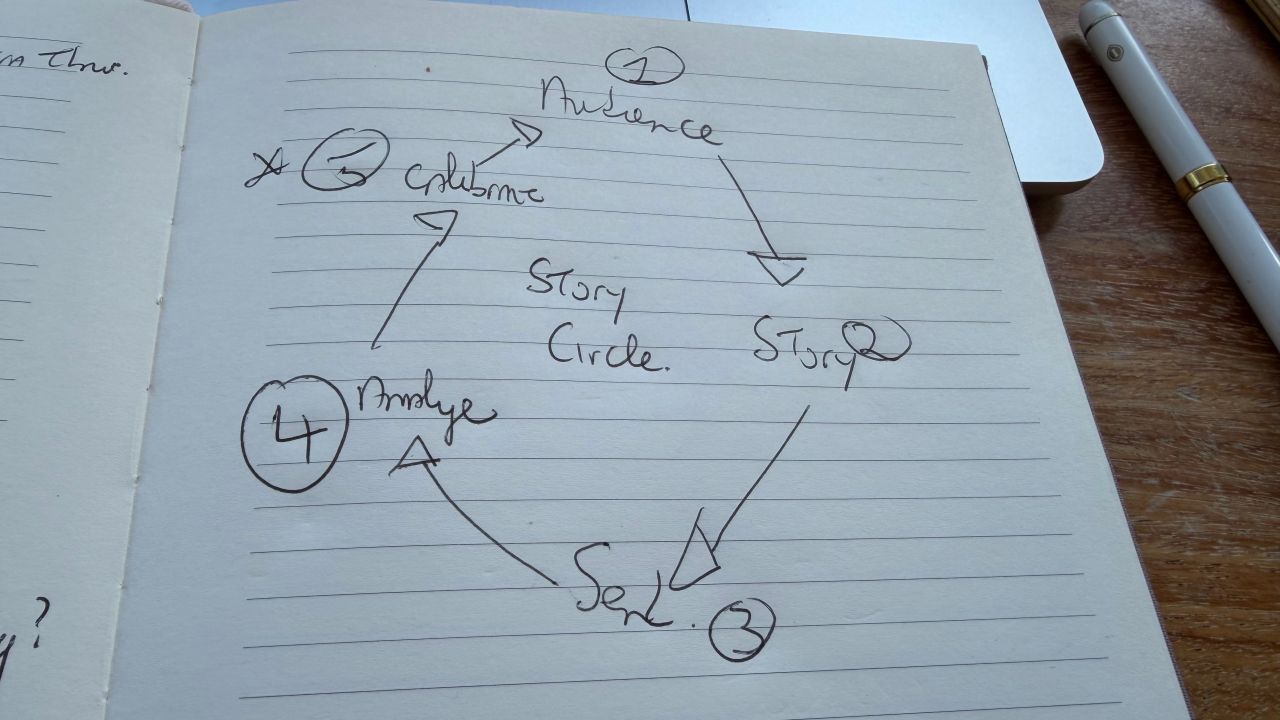
In the summer of 2022, I was on a family holiday when I sat down with a pen and a notebook and started thinking about how people do media relations.
I ended up drawing a circle with six steps:
Intention. Audience. Message. Send. Analyse. Calibrate.
I called it the Story Circle.
It was a simple idea. Every good media relations campaign starts with an intention. You figure out who you want to reach, shape your message, send it out, analyse what happened and use what you've learned to do it better next time. Then something struck me
At MediaHQ, we were only taking people halfway around the circle.
For almost 20 years, we'd helped PR people find journalists, build media lists and get their stories out, and then we stopped at send.
The best analogy I could come up with was that we were taking our customers on a tour to the Cliffs of Moher, dropping them at the entrance and telling them to find the cliffs themselves.
We'd done all the hard work of getting them there. But we were leaving them to figure out the most important part on their own.
What happened to the story?
Did it get coverage? Where did it appear? Who saw it? What worked? What could they do better next time? Once I'd seen the gap, I couldn't unsee it. That's where MediaHQ Pro began.
The problem with how PR works
One of the things that has always frustrated me about media relations is how disconnected the technology is.
You research journalists in one place. Find contact details somewhere else. Build lists in a spreadsheet. Send your press release through another system.
And then, when you want to find out what happened, you go somewhere else again.
You might get a pile of clippings, alerts or reports. Some relevant. Some not.
Then comes the job of trying to connect it all back to the work you actually did.
Surely there has to be a better way?
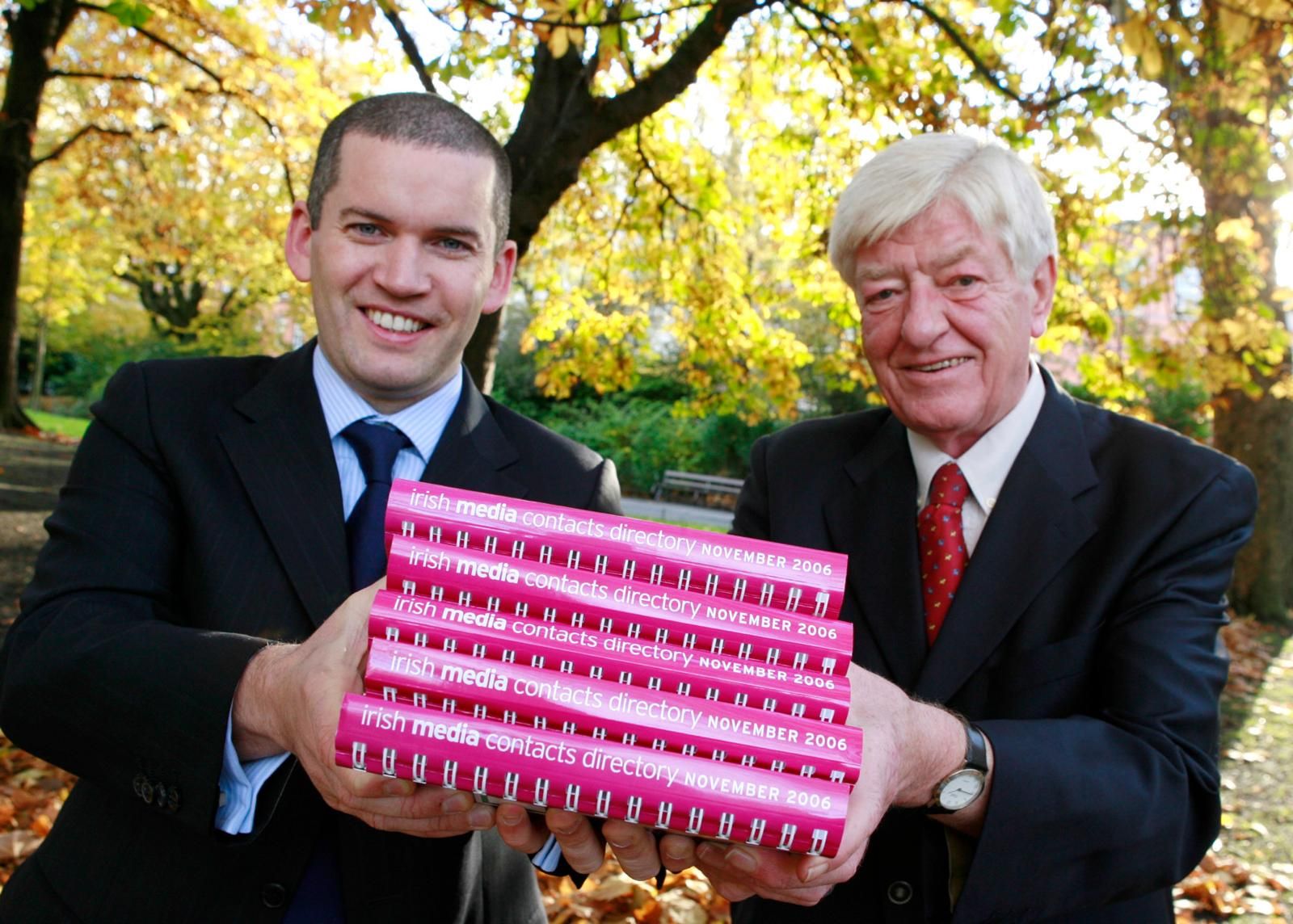
That question has driven MediaHQ for 20 years. It's what took us from printed media directories to an online contacts database and eventually to a media relations platform. It's what drove us to build MediaHQ Pro.
Closing the Story Circle
This week, we've launched MediaHQ Pro.
It's the biggest development we've made in our 20 years in business.
For the first time, you can research millions of news articles, find the journalists who matter, build your audience, distribute your press release and track the online, radio and television coverage it generates, all inside MediaHQ. You can also produce reports that demonstrate the results of your work - we're connecting the whole process: Research. Find. Send. Track. Analyse. Improve.
The Story Circle is finally closing.
Why this matters now
We're living through an extraordinary period of change in technology.
AI is transforming how journalists work, how people discover information and how organisations communicate with their audiences, and I think we're only at the beginning.
Yet much of the technology used in media relations still reflects a world of disconnected databases, fixed searches, spreadsheets and PDF reports.
I don't believe that's how we'd build media relations technology if we were starting from scratch today. I don't think PR professionals should have to work that way.
One of my favourite mantras is:
“If change is what you do, not what happens to you, then you will thrive.”
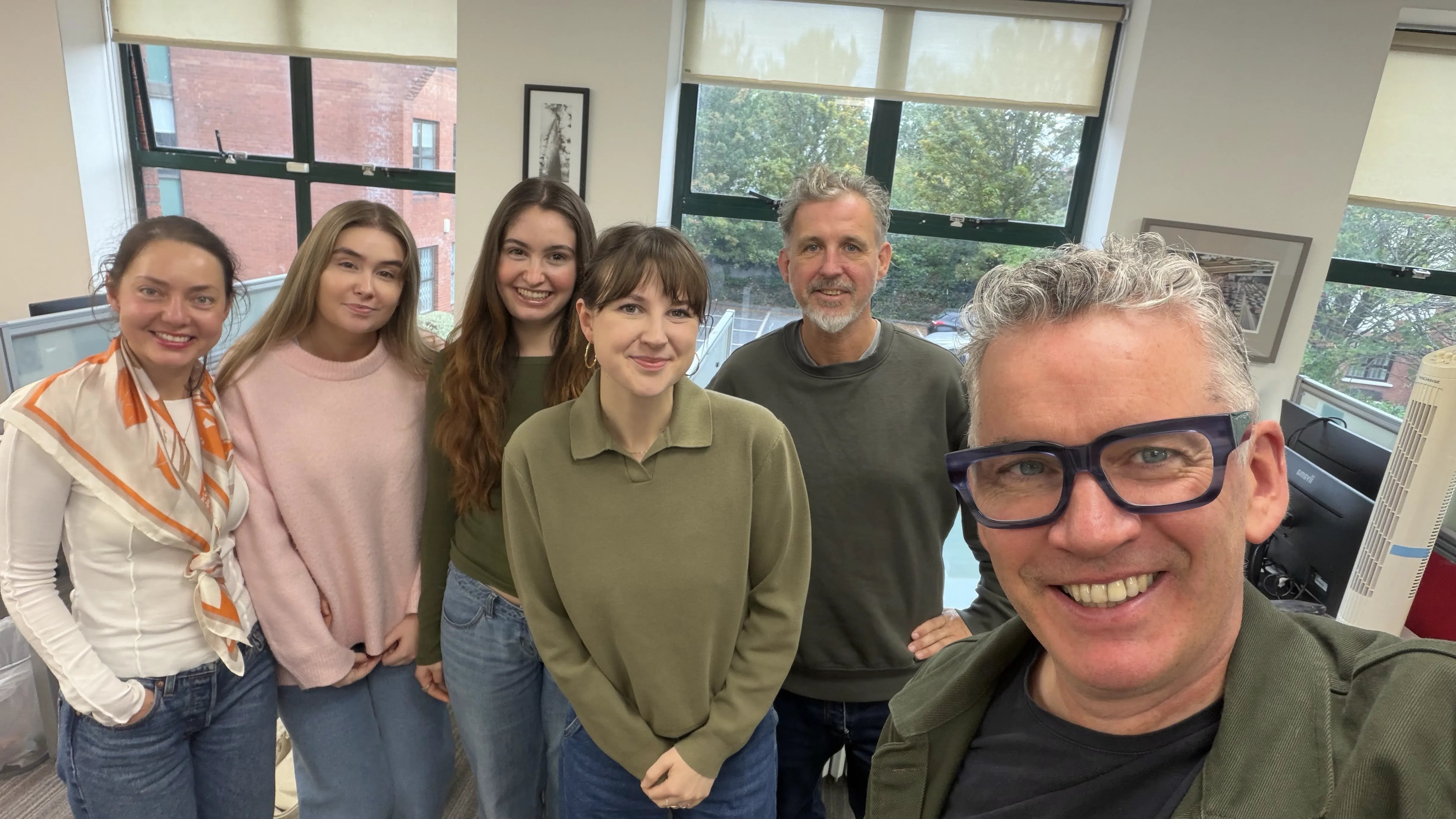
That's the approach we've taken at MediaHQ. We have a brilliant in-house development and research team, and over the past few years they've taken an idea I scribbled in a notebook and turned it into a working platform.
I'm enormously proud of what they've built.
Take control. Get the credit.
There's one other thing that matters to me.
When a press release generates coverage, that coverage doesn't happen by accident.
Someone researched the story. Found the right journalists. Shaped the message. Sent it out. Followed up.
A PR professional or communications team did the work, they deserve to know what happened next.
They deserve the credit for the results, and that's ultimately what MediaHQ Pro is about.
Taking control of the whole media relations process. And getting the credit for the work you've done.
Twenty years after we started, our mission hasn't changed.
We're still helping people connect their stories with their audiences.
We're just not stopping at send anymore.
